Ladders are essential tools in various industries and workplaces, providing safe and stable access to elevated areas. Whether you’re using a ladder for construction, maintenance, or simple household tasks, it’s important to understand the different components and their functions to ensure maximum safety and efficiency. In this blog post, we’ll break down the main parts of a ladder and explain their individual functions.
The rungs are the horizontal steps on a ladder that you climb to reach different heights. Rungs are typically spaced at regular intervals to provide even footing as you ascend or descend the ladder. They can be made from a variety of materials such as aluminium, fibreglass, or wood, each offering different levels of strength, weight, and durability.
Function:
The main function of the rungs is to support the climber’s weight and provide a stable, evenly spaced platform for each step. Non-slip coatings or textured surfaces are often added to prevent slipping, especially in wet or oily environments.
Side rails are the vertical components that run along each side of the ladder, supporting the rungs and providing structural stability. They are often designed to be wider or reinforced to handle the load that the ladder will carry, especially in industrial or commercial applications.
Function:
Side rails ensure the ladder’s stability and strength. They prevent the ladder from flexing or bending under pressure, and they also act as the support structure that holds the rungs in place. The material of the side rails can vary, with options like aluminium (lightweight and rust-resistant) or fibreglass (non-conductive for electrical safety).
The feet are the bottom part of a ladder that rests on the surface you’re working on. They are often made of rubber, plastic, or other materials designed to create friction and prevent the ladder from slipping.
Function:
Feet serve to keep the ladder firmly in place, especially on smooth or uneven surfaces. High-quality ladder feet are essential for ensuring the ladder doesn’t slide, which is critical for maintaining safety when climbing.
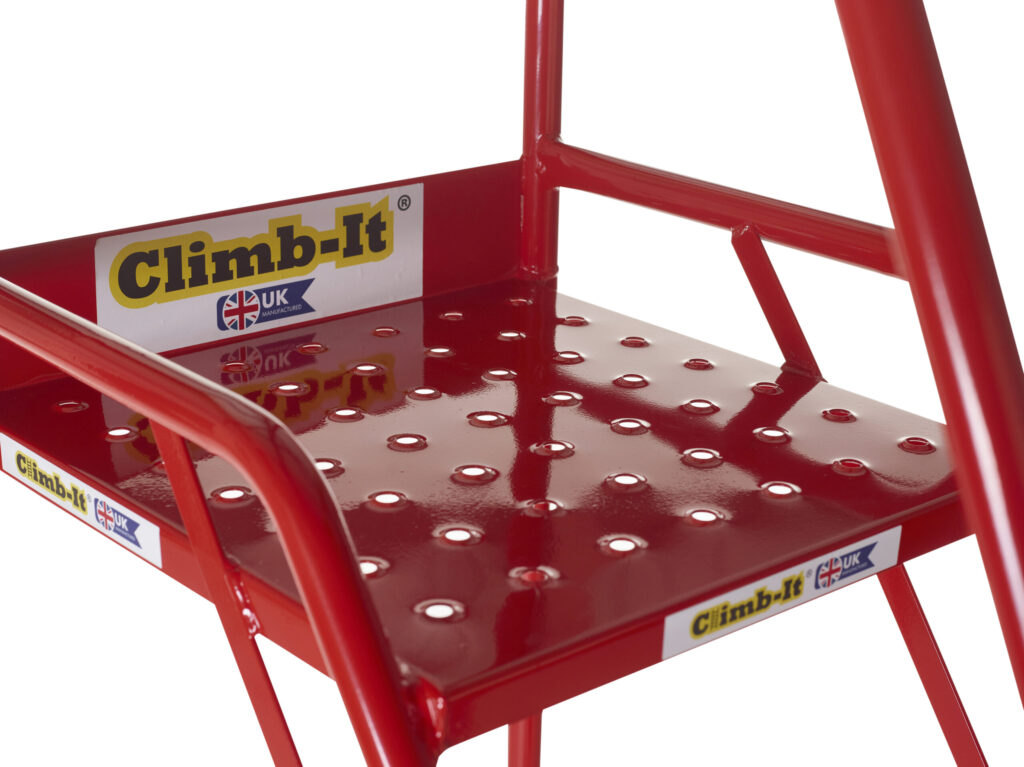
The top cap or top step is the highest part of a ladder, where the climber may rest while working at height. For stepladders, this is often a larger platform or step. In other types of ladders, such as extension ladders, the top cap might be a protective section designed to prevent accidental damage to walls or surfaces.
Function:
The top cap or step allows the climber to have a stable standing position at the highest point of the ladder, preventing overreaching or instability. It also plays a key role in stabilising the ladder, especially in stepladders and podiums.
Extension ladders are adjustable ladders that can extend to reach greater heights. They include a locking mechanism that secures the two sections of the ladder at the desired height.
Function:
The locking mechanism ensures that the ladder’s sections do not collapse or slide down while in use. It provides added security, allowing the ladder to stay in position as you climb. The mechanism can be manual or automatic, depending on the ladder design.
Spreaders are the metal bars or arms that connect the two sides of a step ladder, often positioned near the middle or top of the ladder. They are essential for locking the ladder in an open, stable position.
Function:
The spreaders keep the sides of a stepladder evenly apart, preventing the ladder from folding or collapsing while you’re on it. They ensure the ladder maintains its stability, which is crucial for safely climbing up and down.
For folding ladders, such as A-frame or step ladders, the hinges are the pivot points that allow the ladder to fold up for storage or transportation.
Function:
Hinges allow the ladder to collapse when not in use, making it easier to store or move. They also allow the ladder to be positioned in a stable “A” shape for use. The quality of the hinges is critical to ensure that the ladder locks securely when extended and folds easily when needed.
Every part of a ladder is designed to contribute to its overall safety, stability, and functionality. Whether you’re using a basic stepladder or a more specialised industrial ladder, understanding the key components and their functions will help you use the ladder correctly and safely. Always ensure that your ladder is well-maintained and that all components, from the rungs to the feet, are in optimal condition for safe use.
By familiarising yourself with the components and their roles, you can maximise the effectiveness of your ladder, ensuring that it serves you well in any task at hand. Stay safe, and always follow proper ladder safety guidelines to reduce the risk of accidents in your workplace or at home.